Dry Brushing: Benefits, How to Do It, and What to Expect
Dry brushing is simple: on dry skin, before your shower, sweep a natural-bristle brush over your body in long, light strokes, always moving toward your heart. Start at your feet, work upward, spend three to five minutes, then shower and moisturize. Done two or three times a week, it lifts away dull surface skin, supports circulation, and leaves skin feeling smoother and energized. Here is the full technique, the way our estheticians have practiced it in spa treatment rooms for years.
What Is Dry Brushing?
Dry brushing is the practice of sweeping a firm, natural-bristle brush over dry skin in long strokes toward the heart, usually just before a shower. It comes from the Ayurvedic tradition, where a similar practice called garshana has been part of morning self-care rituals for centuries. Nothing about it requires water, product, or more than a few minutes: the brush does the work, lifting away the layer of dead surface cells that makes skin look dull and feel rough. In a spa setting, estheticians use the same technique to prep skin before body treatments, and that is exactly the role it plays at home: a quick, wake-you-up step that leaves skin smoother and primes it for oil or moisturizer.
What You Need to Start
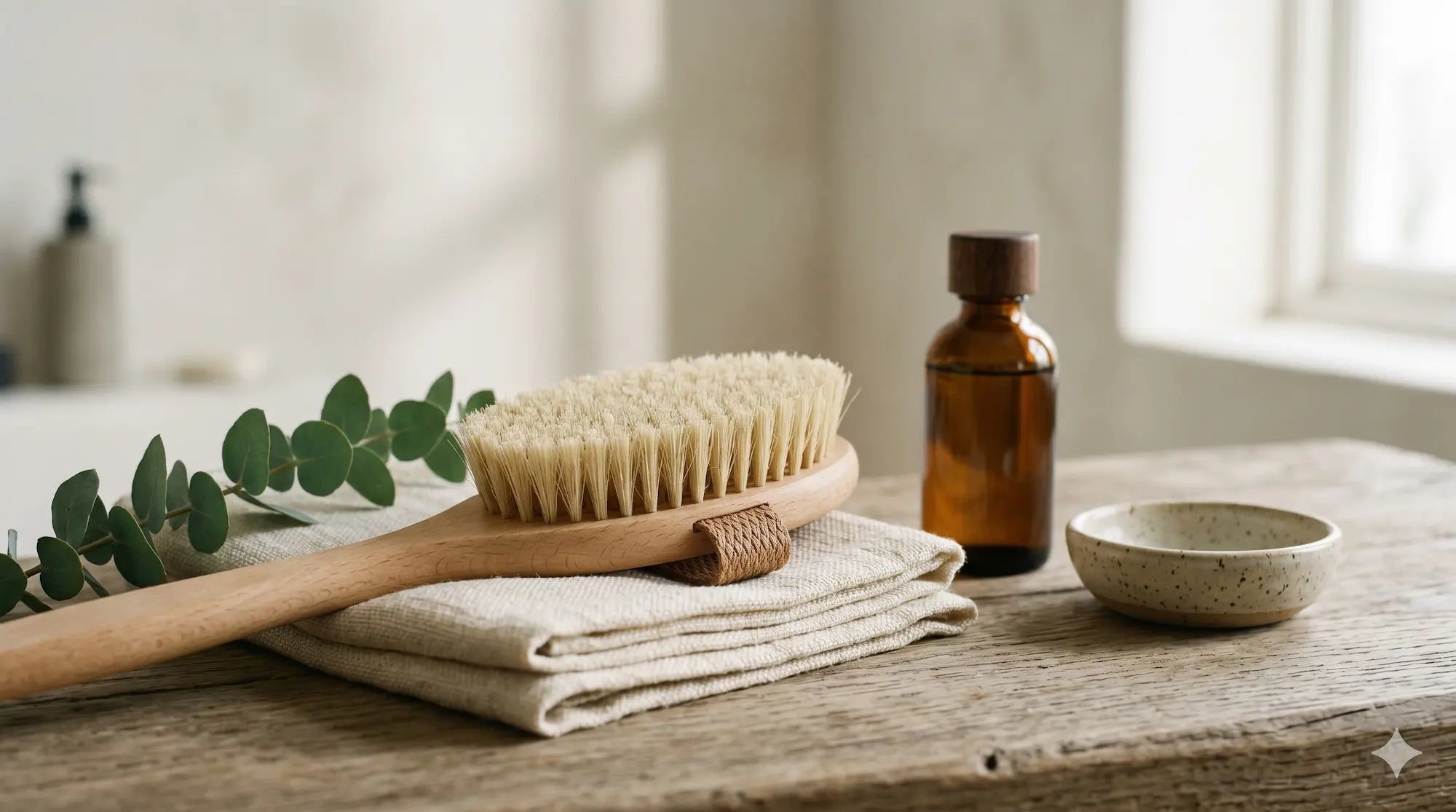
One tool: a firm, natural-bristle body brush, like our Exfoliating Dry Body Brush, made with natural sisal bristles. If a brush feels too intense for your skin, exfoliating gloves offer gentler pressure with more control. Keep your body oil or moisturizer within reach for afterward; freshly brushed skin absorbs it noticeably better.
How to Dry Brush, Step by Step
- Start at your feet. Skin and brush both completely dry. Use long, smooth strokes from the tops of your feet up toward your knees, five to ten strokes per area.
- Work up your legs. Front, back, and sides, always stroking upward toward your heart. Use light pressure; the skin should flush slightly pink, never red or scratched.
- Brush your arms. From the backs of your hands up toward your shoulders, the same long strokes.
- Circle your abdomen. Switch to gentle clockwise circles, following the direction of digestion.
- Feather-light on the chest. The skin of your chest and décolletage is thin, so drop to the lightest pressure you can manage and use short strokes toward the heart. This area repays the care; our décolletage skincare guide covers why.
- Skip the face. A body brush is too firm for facial skin. Skip broken, irritated, or sunburned skin entirely.
- Shower. Rinse away the exfoliated skin cells with a normal shower.
- Moisturize while damp. Apply your body oil or moisturizer within a few minutes of toweling off. If firming the neck and chest is your goal, this is the moment for the routine in our neck and décolletage cream guide.
Do You Dry Brush Before or After Your Shower?
Before. The technique only works on completely dry skin, and showering afterward rinses away everything the brush lifted. Cleveland Clinic guidance agrees: brush just before you bathe. If you brush damp skin you get drag instead of exfoliation, and the bristles can irritate.
How Often Should You Dry Brush?
Start with two or three sessions a week and let your skin answer. Resilient skin often tolerates a brief daily brush; drier or more sensitive skin does better with one or two gentle sessions. The signal to watch is color: a light pink flush is circulation, lingering redness means too much pressure or too much frequency.
Can You Dry Brush Your Face?
Not with a body brush. Sisal bristles that feel pleasantly firm on your legs are too aggressive for facial skin. If you want the same fresh, polished effect on your face, use a purpose-made gentle exfoliant such as our Rice Flower Polish a few times a week instead.
Dry Brushing Benefits: What’s Real and What’s Myth
Two effects are immediate and reliable: physical exfoliation, which leaves skin smoother to the touch, and a temporary boost in surface circulation, which is the warm, energized feeling and light flush after brushing. Skin also absorbs oil and moisturizer noticeably better once the dead surface layer is gone, and the few minutes of brisk, repetitive strokes make a genuinely pleasant ritual to start or end the day. The traditional practice holds that dry brushing supports the body’s natural lymphatic flow; modern evidence for that is limited, so treat it as a possible bonus rather than the reason to brush. You will also see claims that dry brushing detoxifies the body. It does not; detoxification is the job of your liver and kidneys, and no amount of brushing changes that. And on cellulite, be realistic: brushing can temporarily soften its appearance, but no brush changes the structure underneath. More on both below.
Does Dry Brushing Actually Work?
It depends on which claim you mean. The two core effects are not controversial: a firm bristle physically removes dead cells from the skin’s surface, which is simply what exfoliation is, and the friction produces a brief increase in blood flow to the skin, visible as a light pink flush. Dermatology sources, including Cleveland Clinic, describe both. Where the evidence thins out is the bigger claims: there are no robust clinical trials showing that dry brushing reduces cellulite, detoxifies the body, or produces lasting changes in lymphatic function. That does not make the ritual worthless; it makes the honest case for it simpler. You brush because your skin is smoother afterward, your moisturizer works better, and the practice itself feels good.
Dry Brushing and Lymphatic Drainage
The lymphatic claim is the one you will see most often, so it deserves a careful answer. Your lymphatic system is a network of vessels that moves fluid and immune cells through the body, and unlike blood, lymph has no pump of its own; it relies on muscle movement and, near the surface, light pressure on the skin. That is why manual lymphatic drainage, a specialized light-touch massage technique, is a real modality practiced by trained therapists. Dry brushing borrows its logic: strokes are directed toward the heart, following the direction of lymphatic flow, and light stimulation of the skin can plausibly encourage superficial lymph movement in the moment. But there is little clinical research on dry brushing specifically, and it is not a treatment for swelling or any lymphatic condition. If lymphedema or persistent swelling is your concern, see a certified lymphedema therapist. As a wellness ritual, brush toward the heart and enjoy it for what it reliably does.
Does Dry Brushing Help With Cellulite?
Here is the evidence-framed answer: cellulite is structural. It comes from the way fibrous bands connect skin to the tissue beneath, with fat pressing between them, which is why it appears regardless of weight or fitness and why creams and brushes cannot remove it. What dry brushing can do is temporary: the increase in surface blood flow slightly plumps the skin, which can soften the look of dimpling for a short while. If you enjoy that effect, brushing before a beach day is a fine trick. Just buy the brush for the exfoliation, not for the cellulite.
Frequently Asked Questions
Should you shower after dry brushing?
Yes. Brushing lifts dead skin cells to the surface, and a shower rinses them away. Brush on dry skin first, shower second, moisturize while your skin is still slightly damp.
How do you clean a dry brush?
Once a week, wash the bristles with warm water and a drop of gentle soap, rinse well, shake out, and let it dry bristles-down on a towel, away from the shower’s humidity. Never leave it soaking; water degrades natural bristles and the wooden base.
Who should not dry brush?
Skip dry brushing over eczema, psoriasis, broken or inflamed skin, sunburn, and active rashes, and avoid varicose veins and open wounds. If you have very sensitive skin or a skin condition under treatment, ask your dermatologist before starting.
How long does it take to see results from dry brushing?
Smoother-feeling skin is immediate, since exfoliation works on contact. Visible changes in texture and radiance build over two to four weeks of consistent brushing, especially when you follow each session with oil or moisturizer on damp skin.
This guide was reviewed by Daniel McCurry, LMT, CYT, Spa and Bodywork Consultant with more than 15 years in professional spa practice, including Innovative Spa Management, the company that created Privai.